
The Shift: Why Allergies Are About Load — Not Just Exposure
If allergies were only about exposure, your reactions would make sense.
You’d react every time you encountered pollen.
Every time you ate a certain food.
Every time you walked into a dusty room.
But that’s not how it works.
Sometimes you’re fine.
Sometimes you’re not.
And the same exposure can feel completely different on different days.
That inconsistency is the clue.
Allergic Reactions Don’t Happen in Isolation
One of the biggest misunderstandings about allergies is the idea that reactions are caused by a single thing.
In reality, all reactions happen in context.
Your body is always balancing:
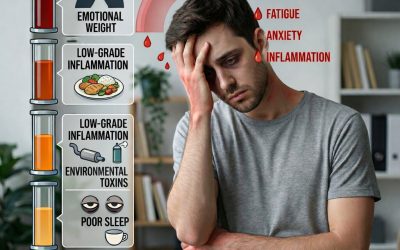
- Stress levels
- Sleep quality
- Air quality
- Inflammation
- Nervous system tone
- Emotional load
None of these act alone.
They stack quietly in the background.
By the time symptoms appear, the real work has already been happening for days — or weeks.
You didn’t suddenly get worse. You finally hit the edge.
The Load You Don’t See Is the One That Matters Most
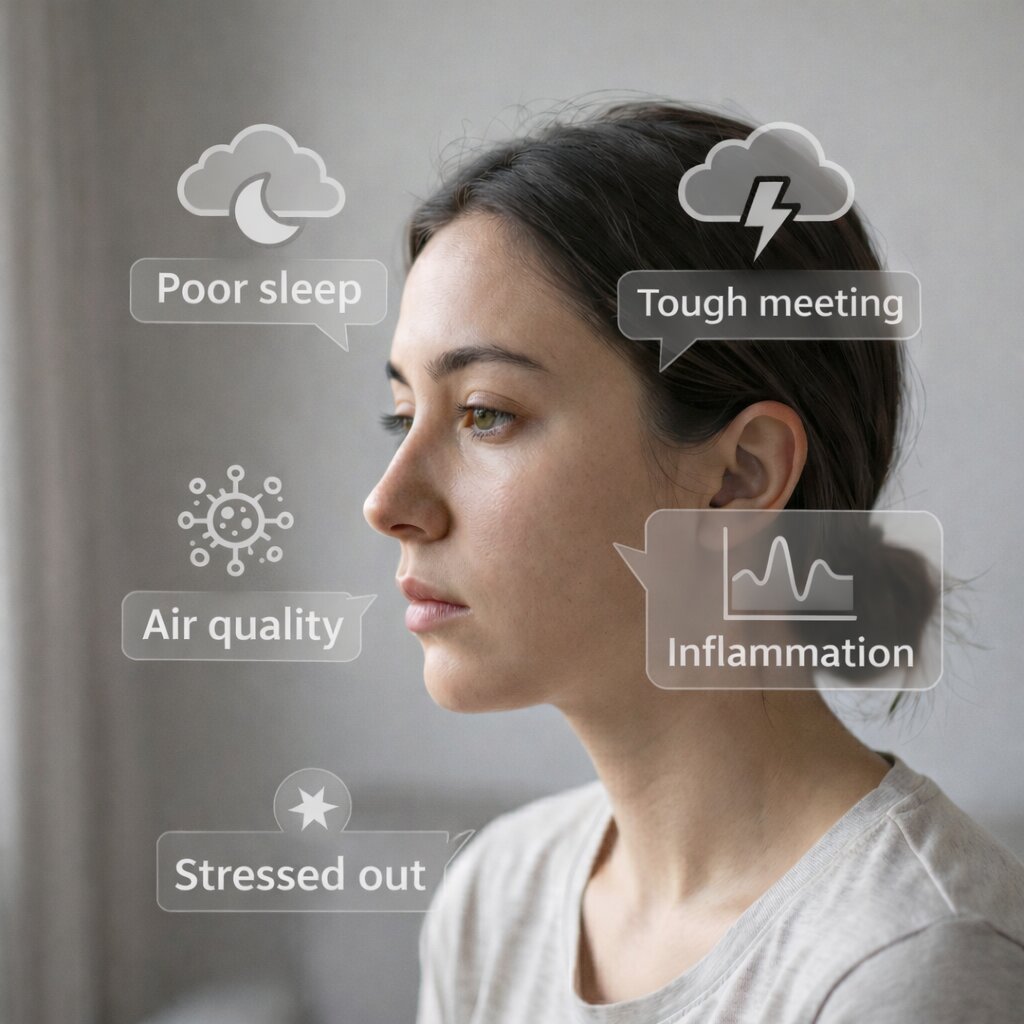
Think of your body like a phone battery.
Each demand drains it a little:
- A poor night of sleep
- A stressful meeting
- Low-grade inflammation
- Suboptimal indoor air
- Ongoing nervous system tension
None of these alone cause a reaction.
But together?
They leave you running on 5%.
Then one small exposure happens — a food, a smell, a dusty room — and it looks like that caused the reaction.
It didn’t.
It just arrived last.
When My Own Load Exceeded Capacity
I hit my own tipping point about seven years ago.
I was barely functioning. Sinuses constantly blocked. Joints aching. A fog I couldn’t think through, no matter how much I rested.
Doctors ran tests. Everything came back normal.
Nothing dramatic had happened. There wasn’t one obvious event.
There was just accumulation.
Work stress. Environmental exposures. Subtle dietary triggers. Sleep strain. Years of stacking inputs without ever recognizing the total load.
My system had crossed its capacity threshold.
When I finally reduced enough of the strain — the picture cleared. Not because I found a single villain. But because I lowered the cumulative weight on my system.
That distinction changed everything.
Why the Trigger Model Falls Short
The traditional trigger model asks:
“What did I react to?”
The load model asks:
“What was already filling the system?”
When people only focus on triggers:
- They become confused by inconsistency
- They feel betrayed by their bodies
- They keep removing things without getting better
That’s because exposure doesn’t equal reaction.
Capacity does.
Why Reactions Feel Random (But Aren’t)
This is where many people lose confidence.
They think:
- “Yesterday I was fine — why today?”
- “I didn’t do anything different.”
- “This came out of nowhere.”
But when you look at the full picture:
- Sleep was worse
- Stress was higher
- The environment was heavier
- Recovery didn’t fully happen
The system was already near its limit.
The reaction wasn’t random.
Nothing was random — your system was full.
Why Small Things Suddenly Feel Big
When capacity is high:
- The body absorbs stress easily
- Exposures pass without consequence
- Recovery happens naturally
When capacity is low:
- Small inputs feel overwhelming
- Sensitivity increases
- The margin for error disappears
This is why people say:
“I’m reacting to things I never used to.”
It’s not that your body suddenly became fragile.
It’s that your buffer shrank.
What This Shift Changes
When you understand load, everything reorients.
You stop obsessing over the single trigger.
You stop blaming yourself for a bad day.
You stop chasing perfect avoidance — because you finally understand that avoidance was never the whole answer.
Instead, you start rebuilding:
- Baseline stability
- Recovery capacity
- Nervous system resilience
And something interesting happens.
Triggers lose their power — not because they vanished, but because your system can handle them again.
The Goal Isn’t Avoidance — It’s Capacity

Living well with allergies isn’t about shrinking your life.
It’s about expanding your capacity so life stops feeling like a threat.
When the system has room:
- Calm returns
- Confidence returns
- Flexibility returns
You start showing up again — to the park, to the dinner table, to the parts of your life you’ve been quietly stepping back from.
Not because the world got safer.
Because your capacity had room again.
And reactions stop running the show.